Early-Onset Obesity Model:
Why the time to act is now
Early-Onset Obesity (EOObesity) model
Early-onset and sustained obesity in diseases such as Bardet–Biedl syndrome (BBS) or acquired hypothalamic obesity (aHO) may significantly increase the risk of developing comorbidities and reduce life expectancy. Early diagnosis and treatment targeting the root cause of weight gain may be essential to minimise long-term health impacts.
The Early-Onset Obesity (EOObesity) model provides a systematic approach to help estimate the impact of early-onset obesity on risk of comorbidities and on decreased life expectancy by considering individual patient weight trajectories.
Comorbidity risk begins early and escalates quickly
The model shows that early onset and severity of obesity (e.g. high BMI z-score or BMI) may increase the likelihood of developing comorbidities such as:

Type 2 diabetes (T2D)

Cardiovascular disease (CVD)

Asthma

Metabolic dysfunction-associated steatotic liver disease (MASLD)

Obstructive sleep apnoea
Impact on life expectancy: the cost of delayed action
The earlier obesity develops, the greater the mortality risk, leading to significant reductions in life expectancy. This, combined with a greater severity of obesity (eg, those with higher BMI z-score), increases risk further.
42
YEARS
of life lost* for patients reaching BMI z-score of 4 by age 4 without subsequent weight loss.
*assumes the general population average life expectancy of 80 years.
Regardless of whether the patient is a child or an adult, trying to change the disease course as soon as possible by reducing weight may be important to decreasing comorbidity risk and improving life expectancy.
Why urgency to treat matters in clinical practice
Understanding and diagnosing the root cause of obesity as soon as possible, for example, in people with BBS or aHO, is critical to implementing effective treatment approaches.
Timely treatment of the root cause of early-onset obesity may avoid sustained obesity later in life, which could significantly reduce the risk of comorbidities and increase life expectancy.
The following patient case studies are hypothetical patient profiles which have been developed using the model. These are not real patient profiles meaning actual risk may vary for individuals.
Click on the profiles to see their possible risk and how reducing their weight may make a difference.
Patient example 1: James
James’ natural obesity trajectory
Obesity onset 2 years old
Weight continues to increase
Weight stabilises
At 3 years old
At 4 years old
> 4 years old
BMI z-score = 2
BMI z-score = 3
BMI z-score = 4
BMI z-score = 4
No treatment
Here you can see James' potential risk factors without treatment.
Life expectancy may be reduced to 37 years old
His potential risk of developing comorbidities by the age 20-25 could be:
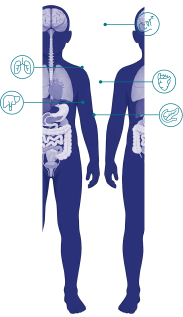

95%
Likelihood of developing fatty liver disease

35%
Likelihood of developing Type 2 diabetes

77%
Likelihood of developing obstructive sleep apnoea

49%
Likelihood of developing asthma

22%
Likelihood of having a cardiovascular event
Treatment initiated at:
If James had intervention as soon as obesity was seen (two years old) and his BMI z-score reduced from 2 to 1.5
Life expectancy may increase to 71 years old
His potential risk of developing comorbidities by the age 20-25 could be:
33%
Likelihood of developing fatty liver disease
6%
Likelihood of developing Type 2 diabetes
33%
Likelihood of developing obstructive sleep apnoea
17%
Likelihood of developing asthma
9%
Likelihood of having a cardiovascular event
With diagnosis and treatment, James' comorbidity risk and life expectancy may improve.
Patient example 2: Susan
Susan’s natural obesity trajectory
Obesity onset 5 years old
Weight continues to increase
Weight stabilises
At 6 years old
> 6 years old
BMI z-score = 2
BMI z-score = 3
BMI z-score = 3
No treatment
Here you can see Susan’s potential risk factors without treatment.
Life expectancy may be reduced to 43 years old
Her potential risk of developing comorbidities by the age 20-25 could be:
85%
Likelihood of developing fatty liver disease
22%
Likelihood of developing Type 2 diabetes
73%
Likelihood of developing obstructive sleep apnoea
32%
Likelihood of developing asthma
16%
Likelihood of having a cardiovascular event
Treatment initiated at:
If Susan had intervention as soon as obesity was seen (five years old) and her BMI z-score reduced from 2 to 1.5
Life expectancy may increase to 71 years old
Her potential risk of developing comorbidities by the age 20-25 could be:
33%
Likelihood of developing fatty liver disease
6%
Likelihood of developing Type 2 diabetes
33%
Likelihood of developing obstructive sleep apnoea
16%
Likelihood of developing asthma
9%
Likelihood of having a cardiovascular event
With diagnosis and treatment, Susan's comorbidity risk and life expectancy may improve.
Want to learn more about the EOObesity model or discuss how it impacts your patients?
Stay informed
Sign up to stay up to date on the release of new resources
References:
- 1.
Wiedemann UCH et al. Obes Facts. 2025;14:1-15.